Compare assets side by side
Pick up to three assets. Everything in the table comes straight from their listings.
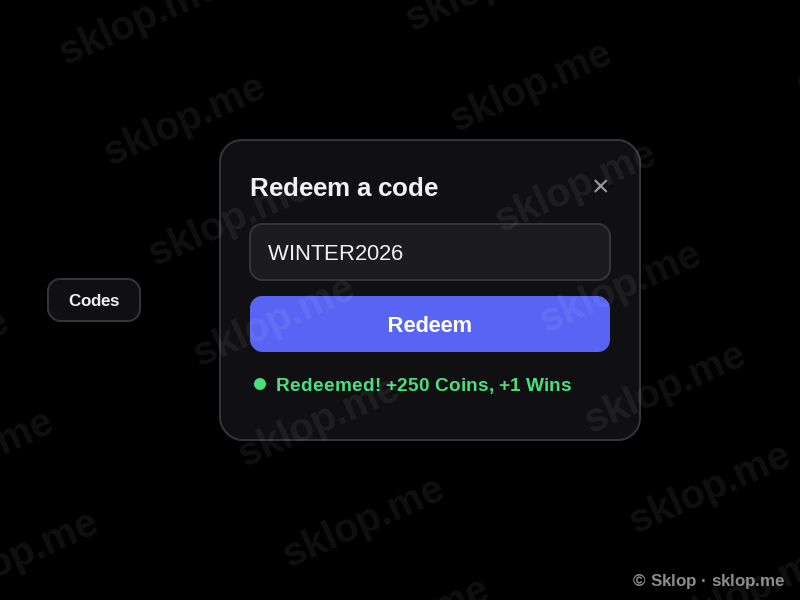 CodeKit: Redeem Codes Redeem codes for your game: a ready-made window, expiring and limited codes, saved per player. | 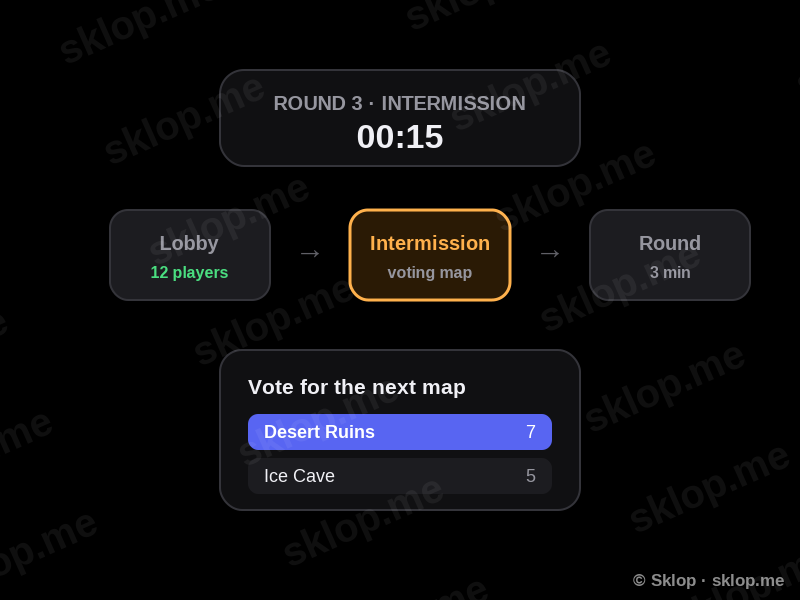 RoundKit: Round Manager Lobby, intermission, map voting and timed rounds: the game loop, ready to use. | |
|---|---|---|
| Price | $2.00 | $4.99 |
| Category | Scripts | Scripts |
| Version | 1.1.0 | 1.0.0 |
| Main file | CodeKit.rbxmx | — |
| Download size | 35.3 KB | — |
| Files listed | 2 | 1 |
| Last updated | 25/11/2026 | 25/11/2026 |
| Creator-listed specs | ||
| Type | Script + 3 ModuleScripts + ScreenGui | Script + ModuleScripts + ScreenGui |
| Data saving | DataStoreService, atomic UpdateAsync with retries | Not listed |
| Code options | Expiry, start date, use limit, group-only, account age | Not listed |
| Networking | 1 RemoteFunction, 1 RemoteEvent | Not listed |
| Rate limit | 1 try/second, 8 wrong codes/minute | Not listed |
| Setup time | About two minutes | Not listed |
| Status | Not listed | Pre-order |
Specs are written by each asset's creator. Check anything critical in Studio after downloading.
How to choose between similar assets
There's rarely one best option. These are the technical points worth checking, whichever store you buy from.
Modularity
Look for logic split into ModuleScripts with one clear job each, and settings kept in a separate config. Modular code is easier to adapt and less likely to break when you change one part.
Network replication
Check which work runs on the server and which on the client, and how often RemoteEvents fire. Systems that validate on the server and send small, infrequent updates hold up better as player counts grow.
Part and polygon counts
For models and maps, lower part and triangle counts load faster and run better on phones. A high count isn't wrong for a hero asset, but it matters if you'll place dozens of copies.
Documentation
Setup notes, commented config values and a changelog save hours. Check whether the listing explains requirements before you buy.
Fit for your scope
A full framework is overkill for a small game, and a minimal script may not stretch to a large one. Pick the asset whose feature list matches what you'll actually use.
The short version
If you're prototyping, start with the smallest asset that covers your core loop, or a free one. If you're building something you plan to maintain for months, favor the option with clearer structure and documentation, even if it takes longer to set up. Neither choice decides whether a game succeeds. That part is still yours.